Provincial Poker Regulations: Tracing How Regional Laws Shape Online Platforms and Tournament Access Patterns
Written by Riley Hughes · Aug 18, 2026
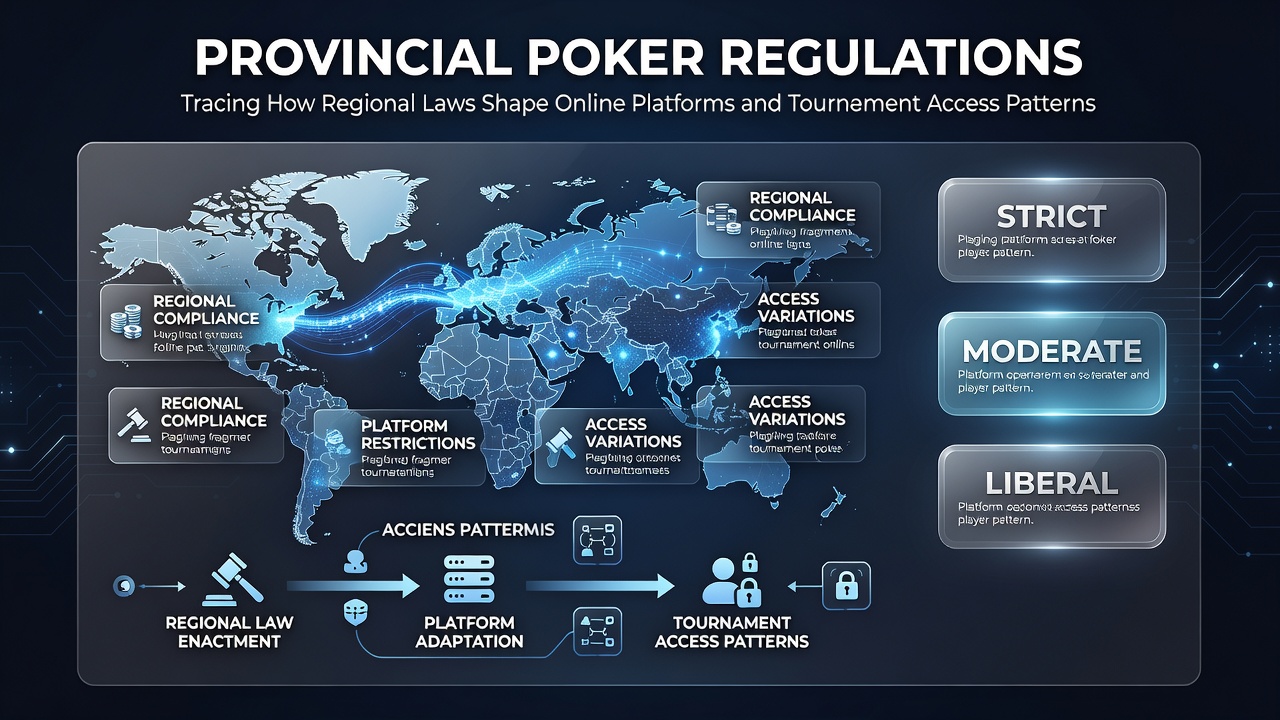
Provincial Poker Regulations: Tracing How Regional Laws Shape Online Platforms and Tournament Access Patterns
Provincial poker regulations in Canada continue to evolve as individual jurisdictions develop distinct approaches to licensing, player verification, and platform oversight, and these differences directly influence how online operators structure their services while also determining which tournaments remain accessible to residents across the country. Observers note that each province maintains its own legislative framework, which creates a patchwork of rules that platforms must navigate when offering real-money games or live events.
Provincial Frameworks and Their Core Differences
Data from regulatory filings shows that Ontario operates under the Alcohol and Gaming Commission of Ontario with a centralized iGaming licensing system that permits multiple operators to offer poker through a single portal, whereas British Columbia relies on the British Columbia Lottery Corporation to manage online offerings in partnership with a limited number of private providers. Alberta and Saskatchewan maintain similar models through their respective gaming commissions, yet each imposes unique requirements around geofencing, payment processing, and tournament approvals that force platforms to customize access based on user location.
Those who study these frameworks often highlight how Quebec’s Régie des alcools, des courses et des jeux integrates poker within broader casino regulations, which results in stricter age verification protocols compared to provinces that allow more flexible digital onboarding. Meanwhile, Atlantic provinces such as Nova Scotia and New Brunswick continue to restrict most online poker activity to land-based venues or limited charity events, limiting digital tournament participation for local residents.
Effects on Online Platform Operations
Operators adjust their software architecture and marketing strategies to comply with these varying rules, and research indicates that platforms serving multiple provinces frequently deploy location-based restrictions that block or redirect users depending on their detected IP address. This segmentation affects everything from bonus eligibility to the types of poker variants that appear in regional lobbies, because certain provinces prohibit specific game formats or prize structures that others permit without issue.
Figures from industry reports reveal that platforms licensed in Ontario have expanded their tournament schedules significantly since the province’s market opened, while operators targeting western provinces must coordinate with single-entity providers that control access to major events. Such coordination often requires additional technical integration for player fund segregation and responsible gaming tools that differ from one jurisdiction to the next.
Tournament Access Patterns Across Regions
Tournament calendars reflect these regulatory distinctions because events sanctioned in one province may not accept entrants from another without special licensing agreements, and data compiled by gaming associations shows that residents of restrictive provinces often travel to neighboring jurisdictions or participate through offshore platforms that operate in legal gray areas. August 2026 marks the point at which several provinces plan to review their current licensing agreements, a development that could alter cross-border tournament eligibility for players who currently rely on multi-province operators.
Experts tracking participation trends note that provinces with more open online frameworks report higher numbers of registered tournament players, while those with tighter controls see greater use of social or play-money alternatives that fall outside regulatory oversight. These patterns emerge because operators prioritize jurisdictions where licensing costs remain predictable and where marketing restrictions allow broader promotion of upcoming events.
Emerging Trends and Cross-Border Considerations
Industry organizations document increasing interest in reciprocal agreements that would let licensed operators share player pools for larger tournaments, although such arrangements require legislative changes in multiple provinces simultaneously. Researchers at academic institutions studying gambling policy have examined how these potential agreements might standardize verification processes without erasing the regional distinctions that currently define access.
One study published through an Australian gaming research center compared Canada’s provincial model with state-based systems in other countries and found that fragmented regulation tends to slow the rollout of new tournament formats while also encouraging platforms to invest heavily in compliance technology. Those patterns continue to shape which events draw the largest fields and which provinces see sustained growth in poker participation.
Conclusion
Provincial laws therefore function as the primary determinant of both platform availability and tournament reach, and ongoing reviews scheduled around August 2026 will likely produce further adjustments to these access patterns. Regulators, operators, and players each respond to the existing framework in ways that keep the overall landscape in constant motion while remaining anchored to the distinct rules set by each province.